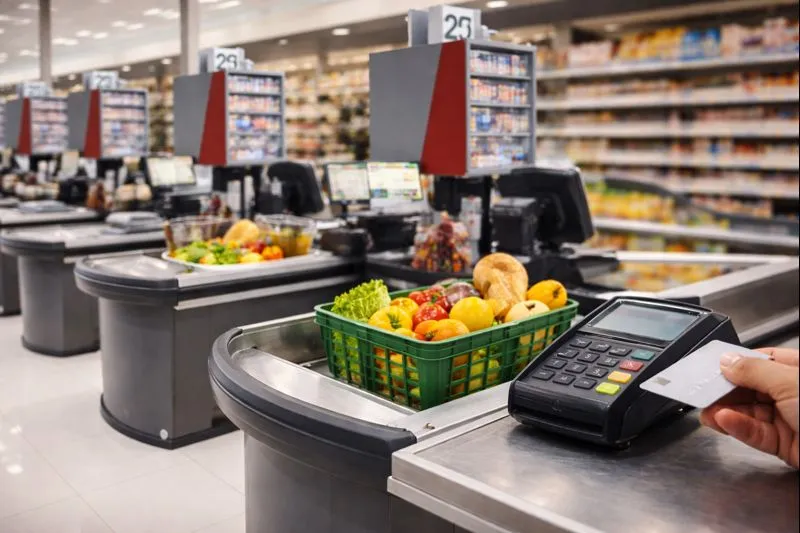
In today’s retail landscape, competition is no longer defined solely by product variety or pricing strategies. In store experience, operational speed, and perceived quality have become decisive factors shaping customer behavior. Within this context, checkout design emerges as one of the most critical elements of the retail environment, despite often being underestimated.
Checkout areas are not merely transaction points. They represent the final stage of the shopping journey, where customers form their lasting impression of the brand. For this reason, checkout design should be approached not only as a functional requirement but as a strategic planning component that directly impacts overall store performance.
The checkout area is the last stop in a customer’s in store journey. Any inefficiency experienced at this stage such as long queues, disorganized layouts, or unclear circulation can negatively affect the entire shopping experience. Even if the customer has been satisfied throughout the store, a poorly designed checkout can undermine that positive perception.
A well planned checkout design, on the other hand, ensures controlled customer flow, faster transactions, and a seamless closing experience. Clear circulation paths, ergonomic layouts, and well structured checkout positioning contribute to a professional, reliable, and stress free environment that customers appreciate.
Checkout design influences not only customer satisfaction but also the efficiency of daily store operations. Poorly designed checkout areas can increase employee fatigue, slow down transaction speed, and lead to operational bottlenecks. Over time, these issues negatively impact staff performance and overall sales productivity.
Well designed checkout areas support operational continuity through proper counter heights, functional workspace organization, and clearly defined cashier zones. Especially in high traffic retail environments, an effective checkout design plays a crucial role in maintaining consistent performance during peak hours.
Customers often evaluate a store based on the comfort and speed of the payment process. A clean, organized, and intuitive checkout design communicates professionalism, attention to detail, and respect for customer time. This perception strengthens trust in the brand and enhances the overall shopping experience.
In highly competitive retail markets, checkout design becomes a differentiating factor that supports customer loyalty and repeat visits. A strong checkout experience leaves a lasting impression that extends beyond the point of sale.
Retail environments are constantly evolving due to seasonal campaigns, peak periods, and store expansion strategies. As a result, checkout design must be flexible and adaptable to changing operational needs. Future ready checkout areas allow retailers to respond quickly without disrupting daily operations.
Modular structures and scalable layouts make it possible to reconfigure or expand checkout zones efficiently. This flexibility not only supports operational agility but also provides long term cost advantages.
Checkout design should not be seen merely as a necessary expense, but as a strategic investment that directly influences store performance. When planned correctly, it improves operational efficiency, enhances customer satisfaction, and accelerates transaction processes.
In the long term, a strong checkout design contributes to brand value and creates sustainable competitive advantage. For this reason, checkout design deserves priority consideration in modern retail investments.